
Volleyball’s Longest Marathon, Match and Set Are Different Records
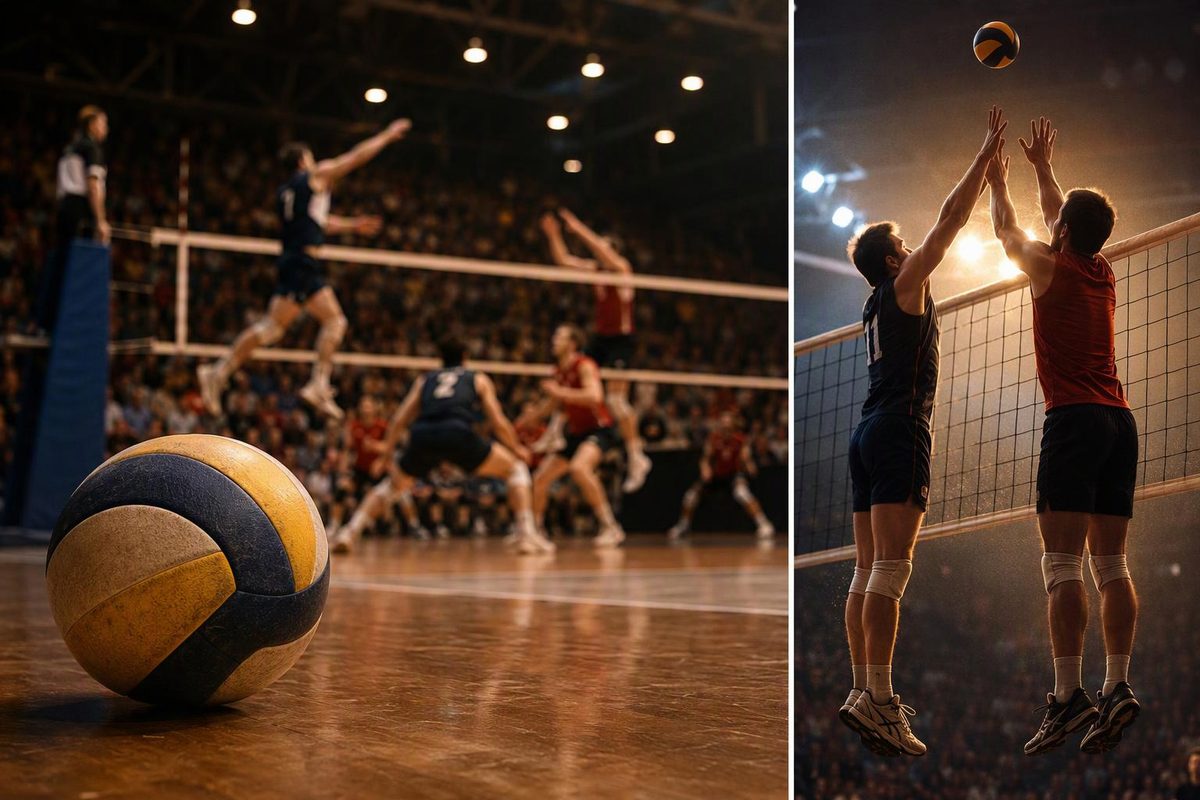
Compare the 101-hour indoor volleyball marathon with reported match and set records, including Italy–Germany’s 66–64 opener and disputed set timing.
The Guinness-listed longest indoor volleyball marathon lasted 101 hours: SVU Volleybal achieved it in Amstelveen, Netherlands, on January 2–6, 2017. That is four days and five hours, but it is an endurance record—not the duration of an ordinary best-of-five match. Guinness World Records lists it specifically as the “longest marathon playing volleyball indoors.”
For a single international men’s match, Italy’s win over Germany on August 26, 2026, lasted a reported 3 hours 50 minutes. CEV describes it as the longest match in the rally-point-system era, and Sky Sport reports the same duration and record category. That international men’s claim should not be expanded into an established record covering every competition and scoring system in history.
Choose marathon, match or set to see the relevant record and its limits.
Find the Right Record Category
Without JavaScript, all five category results remain visible.
Indoor Endurance Marathon
101 hours
SVU Volleybal, Amstelveen, Netherlands, January 2–6, 2017.
This is an endurance record, not an ordinary best-of-five match duration.
Source: Guinness World Records, indoor volleyball marathon category.
Beach Endurance Marathon
25 hours 39 minutes
Four VfB Görlitz players, Germany, July 3–4, 2010.
A separate beach endurance category—not a competitive beach match record.
Source: Guinness World Records, beach volleyball marathon category.
International Men’s Match
3 hours 50 minutes
Italy beat Germany 3–2 at the FIPAV Cup Men Elite on August 26, 2026.
Reported as a rally-scoring-era record in this international context; not an established all-competition, all-era record.
Sources: CEV and Sky Sport match reports.
International Men’s Set
66–64 to Germany
Opening set against Italy: 130 scored points.
Timing is disputed: FIPAV and Gazzetta report 89 minutes; CEV gives 120 minutes. This is a set, not one continuous rally.
Sources: FIPAV, Gazzetta dello Sport and CEV reports.
NCAA Women’s Match
3 hours 44 minutes
Evansville beat UIC 3–2 on October 13, 2023.
Evansville’s contemporary report calls it an NCAA women’s record. UIC reports 3 hours 45 minutes instead.
Sources: Evansville and UIC match recaps.
The Longest Records Belong to Separate Categories
“Game” is ambiguous in volleyball searches. It can refer to an entire match, one set within a match, or an extended record attempt. Those meanings produce different answers because they measure different things.
An endurance marathon measures how long the record attempt continues. A match duration measures the time taken to complete a competitive fixture. A set record can refer to elapsed time or the final score; those are related, but they are not interchangeable measurements.
| Category | Record Figure | Event And Scope |
|---|---|---|
| Indoor endurance marathon | 101 hours | SVU Volleybal; Amstelveen, Netherlands; January 2–6, 2017 |
| Beach endurance marathon | 25 hours 39 minutes | Four VfB Görlitz players; Germany; July 3–4, 2010 |
| International men’s match | 3 hours 50 minutes | Italy–Germany; 2026 FIPAV Cup Men Elite; reported rally-scoring-era record |
| International men’s set | 66–64; 89 minutes reported by FIPAV | Germany won the Italy–Germany opening set; timing disputed |
| NCAA women’s match | 3 hours 44 minutes reported by Evansville | Evansville–UIC; October 13, 2023; contemporary record claim |
The beach result comes from a separate Guinness category. It is not a shorter entry in the indoor category: it belongs to a different discipline and record definition.
The international match and set figures refer to the same Italy–Germany fixture. The FIPAV match report gives Germany’s opening-set win as 66–64 and its duration as 89 minutes. Italy nevertheless won the match 3–2.
For the NCAA example, Evansville’s contemporary report describes its victory over UIC as an NCAA women’s match record lasting 3 hours 44 minutes. That is a claim attached to that competition and report, not evidence that the match was longer than every professional, international or men’s fixture.
The 101-Hour Marathon Is Not a Competitive Match Record
The indoor Guinness result answers the endurance version of “longest volleyball game.” Its category explicitly says “marathon playing volleyball indoors.” Calling it the longest ordinary match would discard the distinction that makes the source meaningful.
The four-days-and-five-hours conversion helps convey its scale, but it does not change what was measured. It should not be presented as a single best-of-five contest, or compared with Italy–Germany as if the two events were attempts to complete the same format.
The supplied record information does not establish a single match score for the 101-hour attempt, an uninterrupted playing time for each participant, or the attempt’s detailed break and substitution arrangements. Those details cannot be inferred from the duration alone. In particular, “101 hours” should not become a claim that the same players stayed on court without interruption for that entire period.
The beach marathon needs the same careful labeling. Guinness lists 25 hours 39 minutes for four VfB Görlitz players in Germany on July 3–4, 2010. That establishes the cited beach endurance result. It does not establish the longest competitive beach match or the highest-scoring beach set.
For a reference answer, the useful wording is therefore “101-hour indoor volleyball marathon,” not simply “a 101-hour match.” The category is part of the answer, rather than a qualification that can be dropped from it.
Italy–Germany Is the Reported International Match Benchmark
Italy beat Germany at the 2026 FIPAV Cup Men Elite in a reported 3 hours 50 minutes. CEV and Sky Sport agree on that match duration. CEV’s rally-point-system-era description identifies the scoring context of the record claim.
That scope matters. A report about an international men’s fixture does not supply a complete audit of domestic leagues, women’s competitions, collegiate matches, endurance events or matches played under earlier scoring systems. The defensible claim is the one the reporting supports: a reported international men’s match record in the rally-scoring era.
The result is also distinct from the opening-set record. Germany’s 66–64 win was one part of the longer match, not its final score. A reader looking for the longest whole fixture should use the 3-hour-50-minute figure; a reader looking for the extraordinary set should use 66–64, with the timing caveat below.
Nothing in the cited match duration establishes the longest individual rally. Match time includes multiple sets and the interruptions within and between them. Nor does the record set’s duration tell us how long its longest rally lasted. The supplied reports give no longest-rally figure.
The Set Score Is Consistent, but Its Timing Is Disputed
The Italy–Germany opening set has a clear reported score: 66–64 to Germany. Its exact elapsed time is less settled in the sources.
FIPAV and Gazzetta dello Sport give 89 minutes, while CEV gives 120 minutes. The score is consistent across those reports. The 89-minute figure used here is the host federation’s figure, not a reconciliation of the conflicting timings.
That discrepancy should stay visible wherever the duration is quoted. Describing the set as “66–64, with FIPAV reporting 89 minutes” retains both the established score and the source of the time. Declaring one precise, undisputed duration would conceal the disagreement.
There is a similar, smaller discrepancy in the NCAA example. Evansville reports 3:44 for its match against UIC; UIC’s recap gives 3:45. The available information does not explain that difference. Use 3 hours 44 minutes when attributing the figure to Evansville, and retain UIC’s alternative rather than treating both reports as identical.
A disagreement over time does not automatically invalidate the reported score or winner. These are separate fields in the record. For Italy–Germany, the score can be stated consistently while the timing remains qualified.
A Two-Point Margin Allows a Set to Reach 66–64
Under the standard FIVB indoor rules, the first four sets have a target of 25 points, but the winner must lead by two. At 24–24, reaching 25 is no longer enough on its own. Play continues until a team establishes the required margin.
The deciding fifth set has a target of 15, also with a two-point margin. There is no fixed upper score cap in those provisions. These requirements appear in FIVB’s 2025–2028 rules, Rules 6.2–6.3.
The progression to an extended score is straightforward:
| Score | What It Means |
|---|---|
| 24–24 | Neither team has the required winning margin |
| 25–24 | The leader has set point, but the set continues |
| 25–25 | The teams are level again |
| 64–64 | The same two-point-margin rule still applies |
| 66–64 | The leader has the required margin and wins |
If Germany scores at 24–24, it leads 25–24. If Italy wins the next point, the score becomes 25–25 and the opportunity is cancelled. That pattern can repeat at 26–26, 27–27 and beyond without producing a winner.
From 64–64, two consecutive German points produce 66–64 and end the set. The size of the score does not trigger a different victory condition: the same margin that applied at 24–24 still governs the finish.
The final score contains 130 scored points, including 82 added after the teams reached 24–24. Those totals describe the score, not the set’s elapsed time. They do not mean there was one 89-minute rally, and they cannot be used to settle the disagreement between the published timings.
For the scoring framework behind those distinctions, see how volleyball scoring works.
Germany’s Record Set Still Counted as Only One Set
Italy’s winning match score was 64–66, 25–22, 23–25, 25–22, 15–12, written from Italy’s perspective. Germany won the extraordinary opener, but Italy won three of the remaining four sets to take the match.
| Set | Italy–Germany | Set Winner |
|---|---|---|
| First | 64–66 | Germany |
| Second | 25–22 | Italy |
| Third | 23–25 | Germany |
| Fourth | 25–22 | Italy |
| Fifth | 15–12 | Italy |
The opener’s huge score did not give Germany extra credit in the match tally. A set won 66–64 counts as one set, just as a set won 25–22 does. Italy’s victory followed the number of sets won, not the unusual size or duration of the first set.
The Evansville–UIC match illustrates that distinction at the shorter fifth-set target. Evansville eventually won the decider 36–34, far beyond 15. Both teams finished with 131 total points, yet Evansville won the match because it won the required sets.
Aggregate points therefore cannot substitute for the match result. Equal point totals do not make a match a draw, and a particularly large set score does not decide the fixture by itself. The relevant columns are set scores and sets won.
Use the Record’s Category With Its Number
For an endurance answer, use 101 hours for the Guinness-listed indoor marathon. For the cited international men’s match, use 3 hours 50 minutes for Italy–Germany, with the rally-scoring-era scope attached. For its opening set, use 66–64 to Germany, and identify 89 minutes as FIPAV’s reported timing rather than an undisputed figure.
The NCAA and beach examples remain useful comparisons, but neither belongs under an unqualified universal match record. Evansville’s 2023 report concerns NCAA women’s volleyball; the beach Guinness entry concerns an endurance marathon.
A record label should preserve three things: what was measured, which competition or discipline it covers, and which source supports the figure. Without those boundaries, “longest volleyball game” collapses several different achievements into a claim the evidence does not establish.